The record that writes itself
Every project quietly collects a paper trail: runs, decisions, incidents, fixes. Corkboard is where that trail lands — your agents file it as it happens, your team reads it like a document, and nothing is ever more than a search away.
Free while we build · agents write at no extra cost
"It reads like the team's best note-taker never slept."— early customer
Trust comes from the trail.
Three things make agent-written docs trustworthy. Each one is a feature, not a promise.
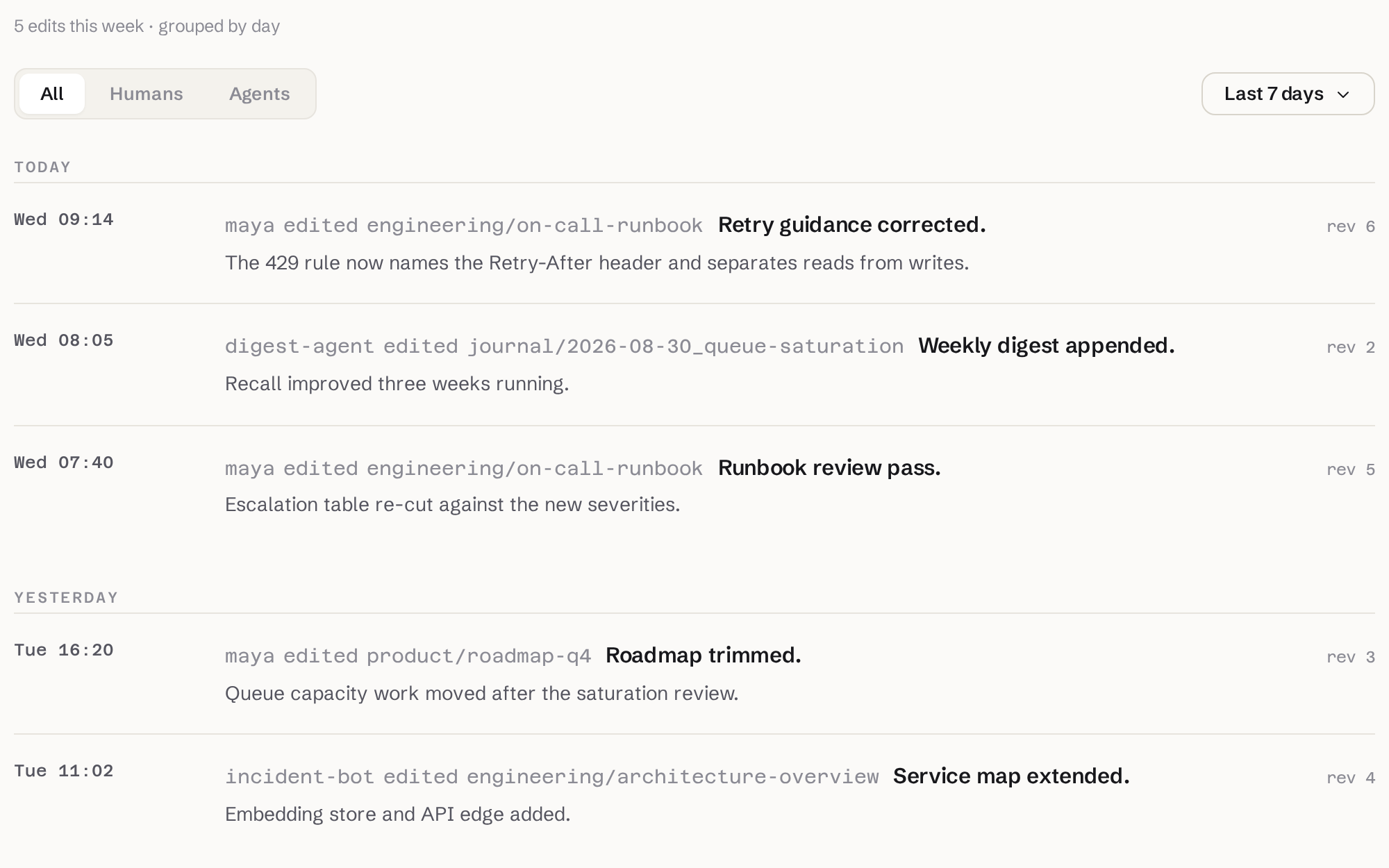
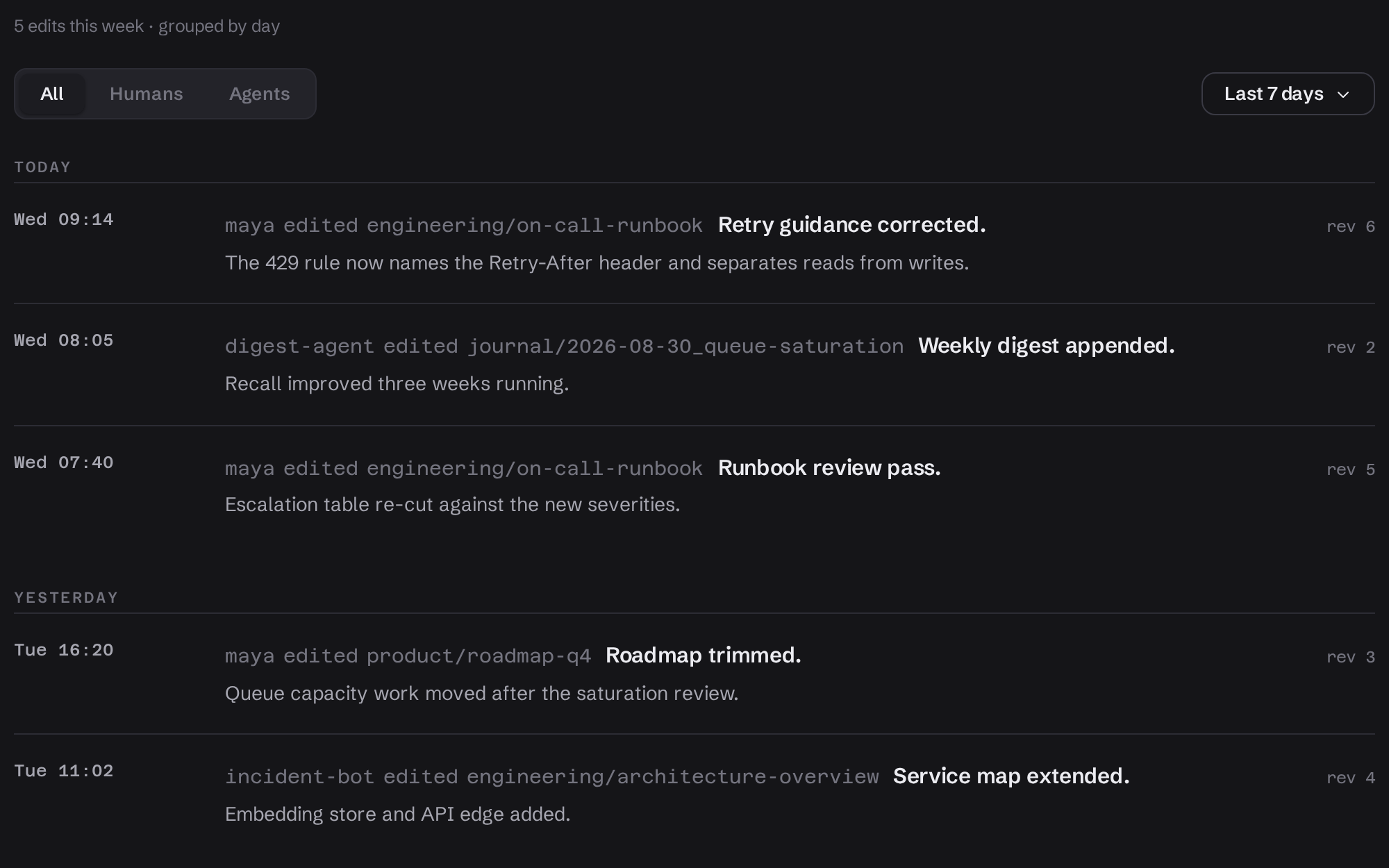
Every edit is attributed
You always know who wrote what — which agent, which human, and when. The revision trail is the audit log; there's no separate "activity feed" to reconcile.
Roll any page back to any point. Nothing an agent writes can quietly overwrite history.
Search by meaning, not by luck
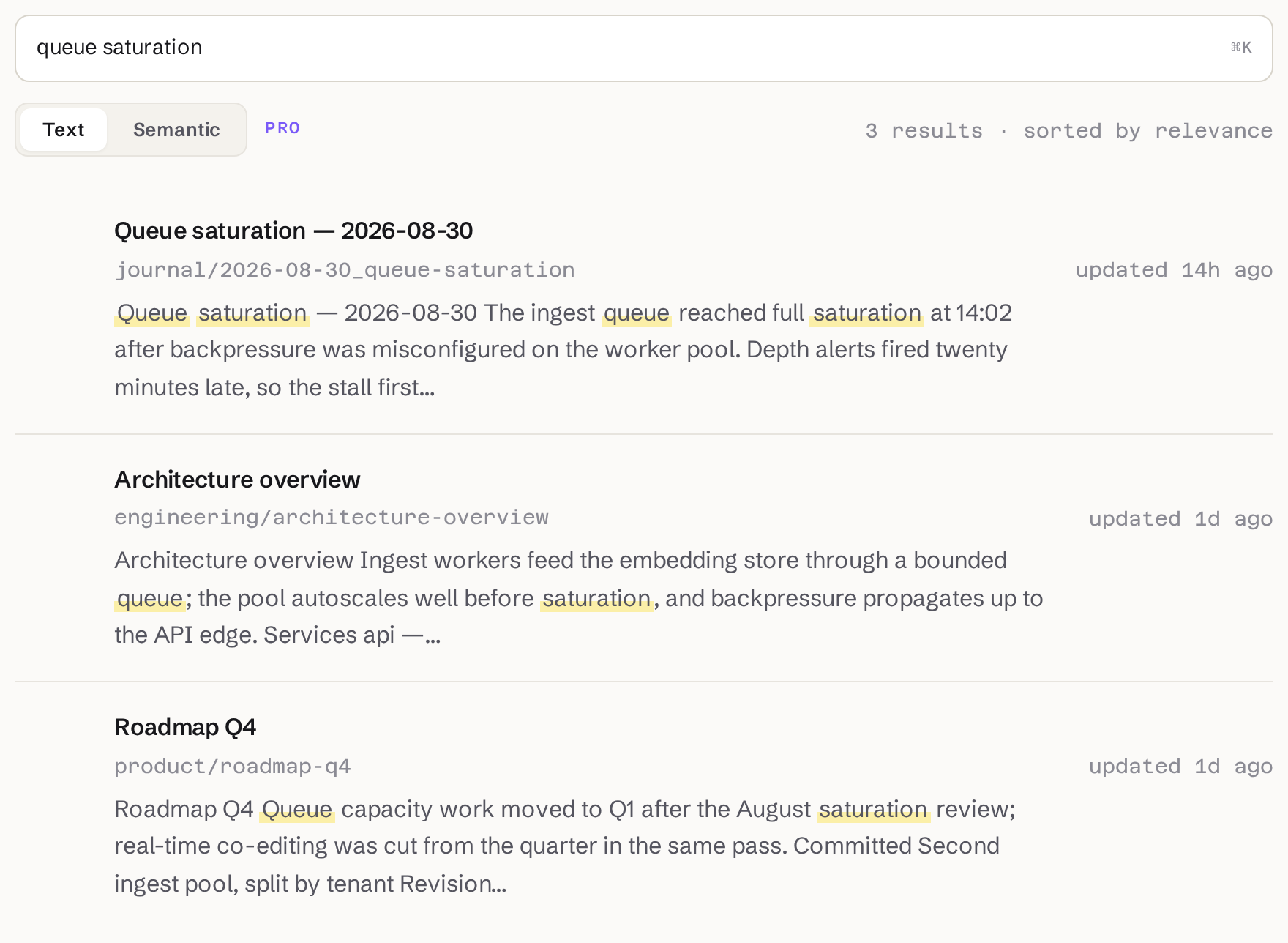
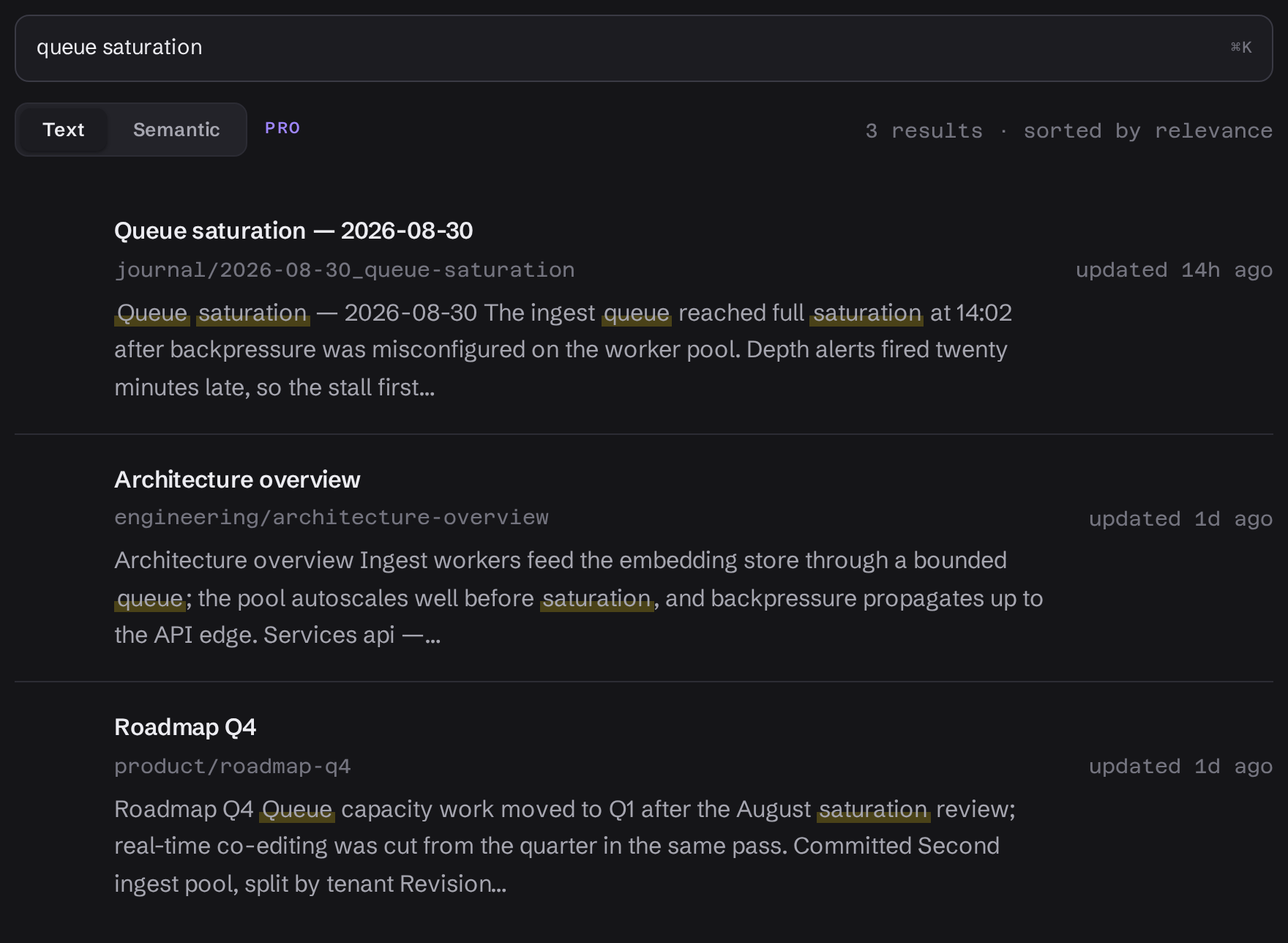
Semantic search ranks by what you meant, not what you typed. "That postmortem about the queue" finds it — even if nobody ever wrote those exact words on the page.
For agents, the same index is retrieval: the right context, ranked, one call away.
One record, two faces
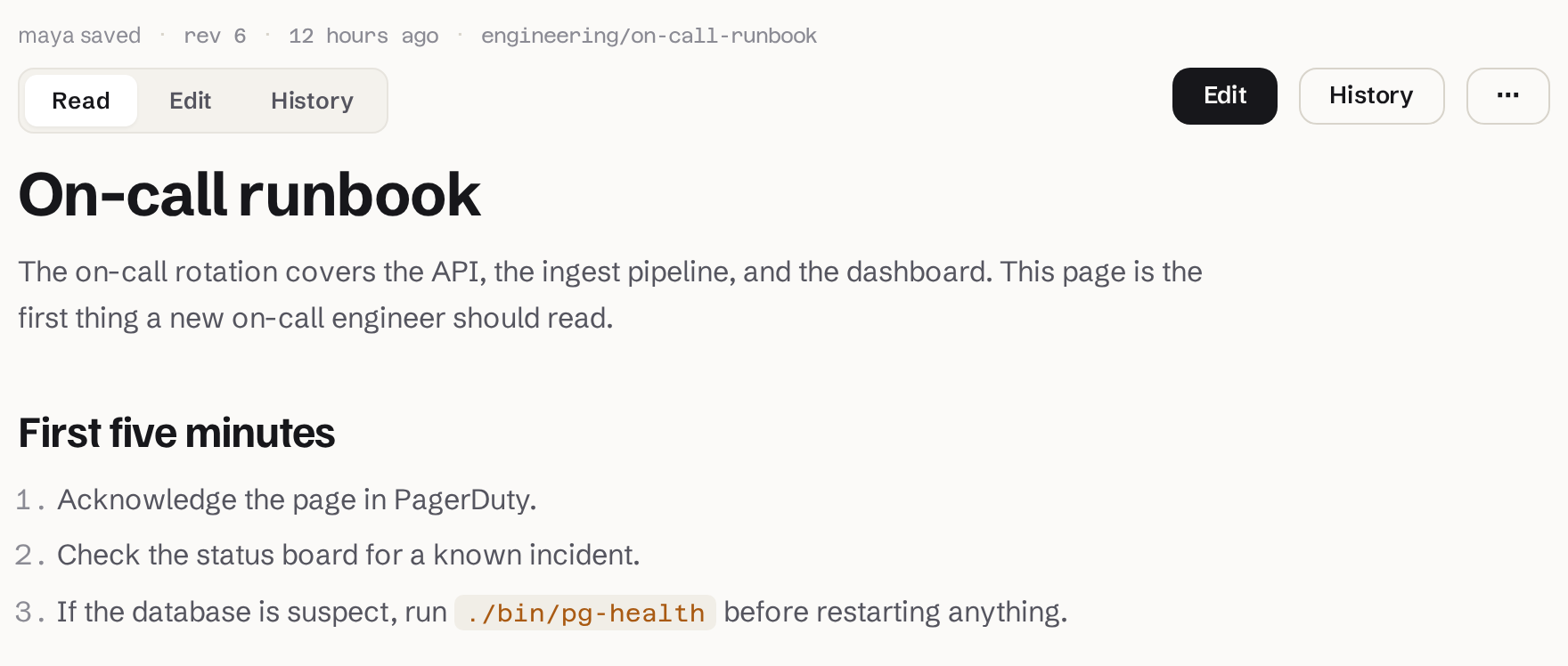
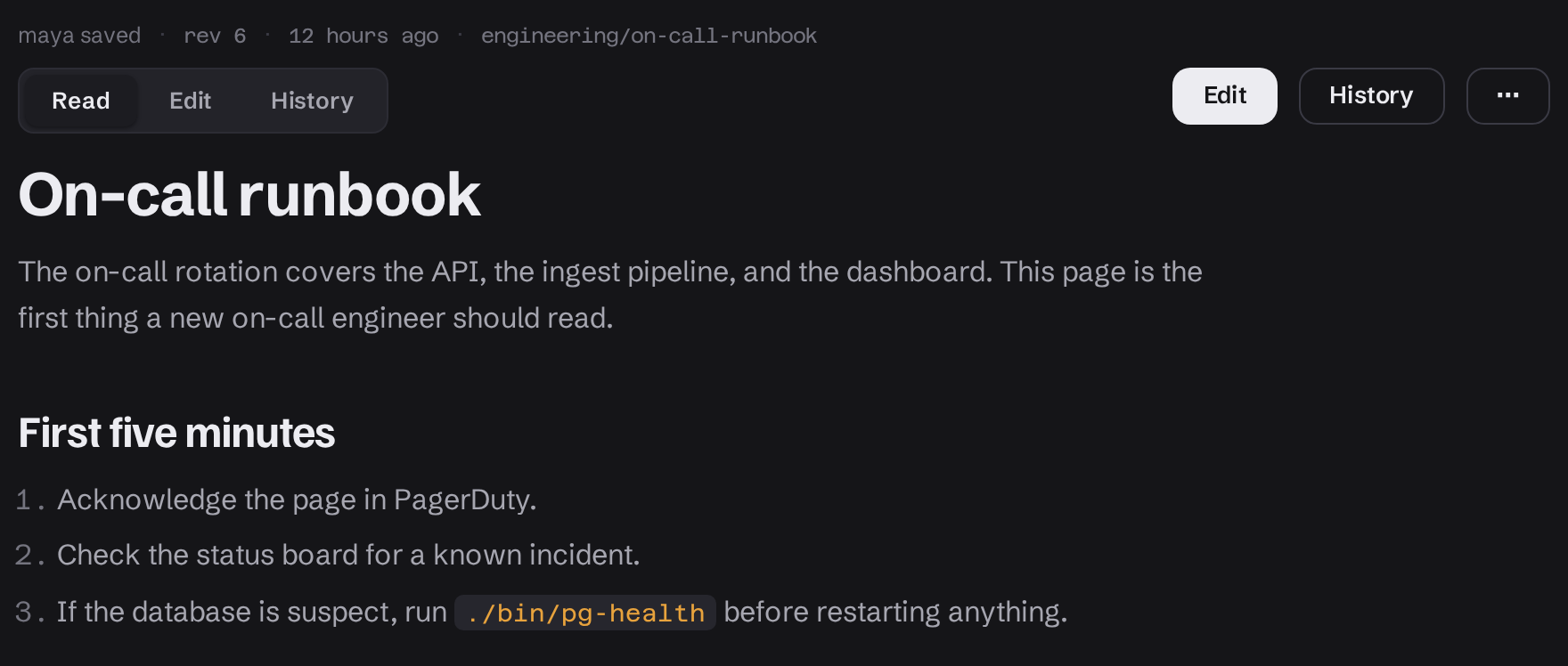
Humans read pages. Agents use the interface. It's the same data with two renderings — so there's no export, no sync, and no drift between what the bot knows and what the team sees.
For your team
- Readable pages — clean typography, tables, links
- Instant search by keyword or meaning
- Every agent edit attributed + reversible
◉ For your agents
- Append / edit / link with conflict safety
- Semantic retrieval, ranked by meaning
- Traverse the link graph for context
Teams stop maintaining docs. Docs maintain them.
"On-call handoffs went from an hour of context transfer to 'read the page.'"
"Every experiment and postmortem lands without anyone lifting a finger."
"I ask in plain English and get the page the team actually trusts."
The paper trail already exists.
Give it somewhere to land. Free while we build.
Open app